
Aweh Ruminants and Groupies
Back in the 1980s and early 1990s, when Cheers set the benchmark for the half-hour sitcom, storytelling moved at a different pace. A slower, character-driven world unfolded in a Boston bar, one that now feels almost alien in an age of TikTok clips and algorithm-fed distraction.
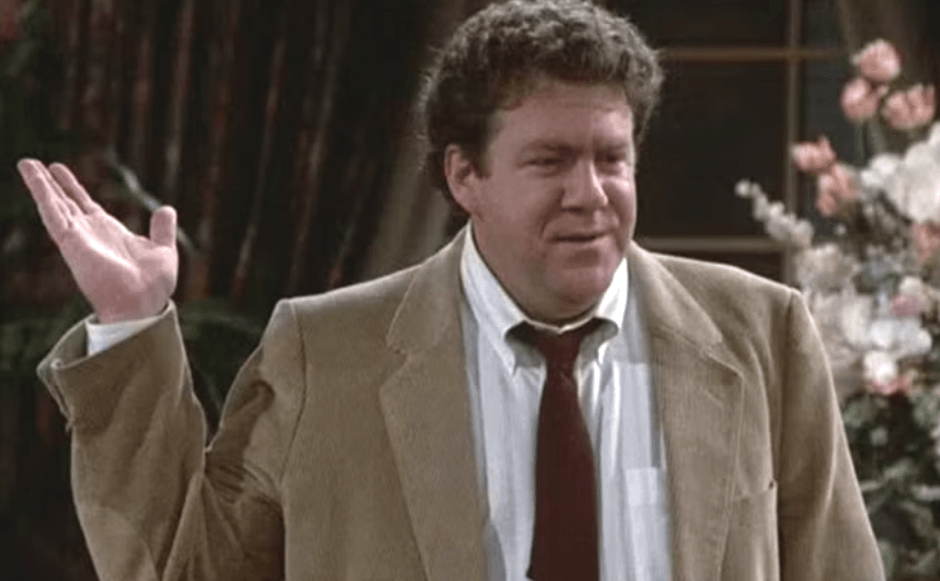
In that world, Norm Peterson could spend an entire episode barely moving from his barstool. When an unsuspecting couple once took his seat, the disruption felt almost existential. Norm hovered awkwardly until they asked what was wrong. His reply was simple:
“I sit there.”
I Sit There
That’s more or less the point of this blog. Not humility- quite the opposite. This is an act of unapologetic intellectual loitering. Like Norm, I have my stool. Unlike Norm, I use it to pontificate as if I matter, and as if anyone is listening.
There’s something faintly ridiculous about that assumption in a world already saturated with noise and incoherent bullshit. And yet, here we are. I sit here. I may as well say it plainly.
Normative (Because I Say So)
Now, in pompous academic company, we like to use terms like normative just to show that our vocabulary is bigger than yours. Normative refers to statements about how the world should be. What is good, bad, despicable, desirable, intolerable or, for good measure, vile, grotesque, contemptible, abhorrent, and indefensible?
In less polite company, it’s what happens when I climb onto an intellectual barstool and start issuing moral instructions as if I own the place. And, of course, if the place is my blog, I do own the place.
Doubling Down
Having likely already jeopardised any future U.S. visa applications with prior musings on the Donald, I may as well double down. The consequences of his amoral, corrupt conduct are reverberating far beyond U.S. borders, touching everything from the killing of innocent civilians to rising energy costs and even fertiliser-driven food insecurity. Famine is a possibility. This is a man who sits at the centre of global attention, and that is exactly the way he likes it.
Monuments to Ego
His behaviour is vile, grotesque, contemptible, abhorrent, and indefensible.
An enormous arch in Washington, naturally bigger than the Arc de Triomphe in Paris, has reportedly been approved, a not-so-subtle swipe at Emmanuel Macron. In keeping with form, Trump has suggested it be dedicated to himself. If this isn’t the very definition of malignant narcissism, I don’t know what is.
Ego with real-world consequences
The situation with Iran feels less like a strategy and more like the latest expression of an increasingly unhinged instinct for spectacle. From Venezuela to the surreal flirtation with annexing Greenland, the pattern is clear: provocation first, consequences later.
It’s not just the policy positions that unsettle; it’s the apparent indifference to where they lead. Iran is not a rhetorical plaything or a branding exercise; it’s a fault line with real capacity for escalation. And yet, the same impulse that turns territory into a talking point now risks turning conflict into theatre, except this time, the consequences are devastating.
War on Science
And then there is his hostility to science. From my stool, the hostility toward science is harder to ignore because it has consequences you can measure.
When scientific institutions are undermined, whether through funding instability, political interference, or the dismissal of expertise, the damage isn’t abstract. It shows up in delayed research, abandoned projects, and a gradual erosion of trust in the systems that produce knowledge.
In the United States, agencies like the NIH, NSF, and NASA aren’t just domestic bodies; they’re pillars of a global research ecosystem. Disruptions there don’t stay contained. They ripple outward, affecting collaboration, innovation, and long-term progress.
This isn’t a collapse in a single dramatic moment. It’s slower than that. A steady erosion of funding, confidence, and institutional stability.
History’s Warning
History offers a fairly brutal warning about what follows when science becomes subordinate to ideology. Under Lysenkoism in the Soviet Union, politically convenient nonsense replaced genetics, dissenting scientists were purged, and agricultural policy was built on fiction with predictably disastrous consequences for food security. In China, under Mao Zedong, the Great Leap Forward and Cultural Revolution elevated ideological zeal over expertise, producing pseudo-science, shuttered universities, and catastrophe on a national scale.
The lesson is neither subtle nor historical trivia: once evidence is bent to fit politics, reality eventually pushes back, with interest.
Listen Carefully
Some experts have begun to question his cognitive ability, pointing to the quality of his public speech, rambling, repetitive, and tangential, and veering into bizarre asides such as remarks about Arnold Palmer’s penis as a basis for concern. Linguistic analyses of Donald Trump’s speech patterns have identified increasing disfluency and reduced complexity over time. Disinhibited, inappropriate, or oddly personal remarks can be associated with certain forms of cognitive decline, particularly where frontal-lobe function is affected. Dearly beloved readers try and listen to the man and judge for yourself.
Three More Years?
Are we really in for another three years of this? From my stool, the question is unavoidable. At what point do the adults in the room and the men in white coats decide enough is enough? And how much further strain can the global order absorb before the damage becomes not just cumulative, but irreversible?
Perhaps It’s Just Me
Of course, it may simply be me.
Perhaps I’m the one losing the plot, another arbitrary bloke on a barstool, pissing into the wind. Maybe this is exactly what the moment demands: disruption, spectacle, a gleeful indifference to convention and expertise.
Maybe I’m just wrong.
But until I’m convinced otherwise. I sit here.
Until next time
Bruce

