
Aweh dearly beloved fellow ruminants & groupies
148/305 days of load shedding in 2022
Last week because I am a half-breed between a Vulcan and a human, I allowed my emotions to get the better of me and I posted an emotional blog. Let’s coin the term, “Vulman” for the half-breed that I am. This week let me try and be a good Vulman and try to address the topic of greenwashing using logic, reason, and science with some emotion thrown in to cloud matters and make things messy and confusing.
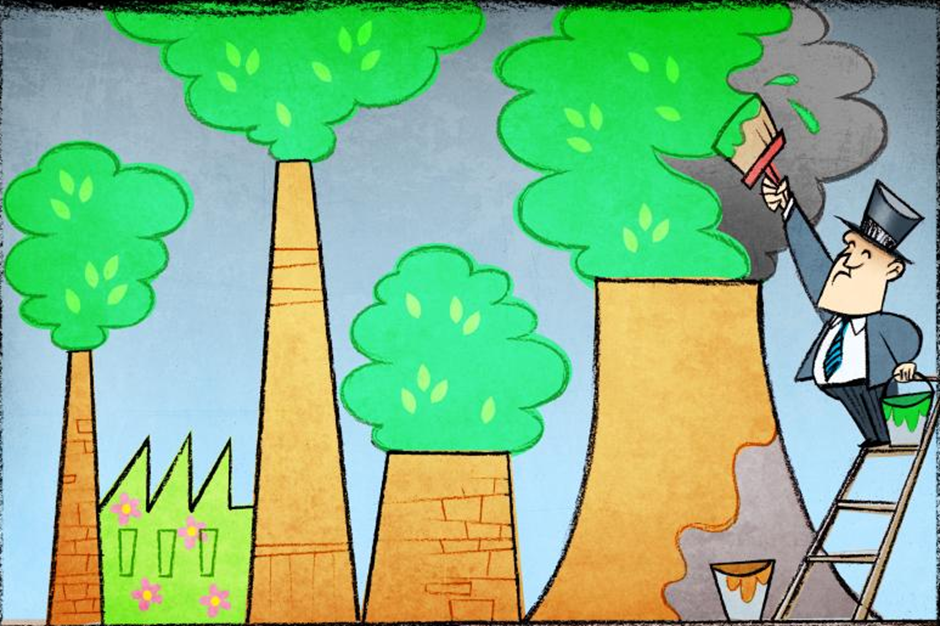
So, for those of you who don’t know what is greenwashing? Greenwashing can be defined as, “disinformation disseminated by an organisation so as to present an environmentally responsible public image”. For example, a fossil fuel company announces a partnership to pursue a novel technology that could lead to low-emission solutions one day. Not actually a fib but helps to divert your attention from the core business which is producing fossil fuels.
This week saw the 2022 United Nations Climate Change Conference in Egypt otherwise known as COP 27. Catherine McKenna has led a United Nations expert panel to evaluate the net zero commitments of corporations, financial institutions, and cities. She and the panel are not happy and accuse organisations of greenwashing. Current plans to reach net zero often rely on commercially unproven technology that has yet to be scaled or on offset systems whose credibility is hotly debated. The expert panel is now trying to eliminate carbon offset credits that they say lack credibility and are a cheap but misleading way to achieve targets. Organisations need to cut their own emissions and we should move away from net zero to zero. Ouch! Mckenna and the panel are not wrong when it comes to the amount of greenwashing that is happening now.
The intergovernmental panel on climate change models (IPCC) models require carbon emissions to be cut by 50% by 2030 for the world to achieve a 1.5 oC temperature rise target. The panel still wants to achieve this target and says organisations need to provide annual performance reports in clear language and focus on absolute emissions and not intensity targets.
What is my view on this? The probability that carbon emissions will be reduced by 50% by 2030 is as close to zero as makes no difference. I am not alone in this view and the Economist, amongst others, has recently published a special report bluntly stating that the world is going to miss the 1.5 oC target and we need to face up to this fact.
What is the real problem here? Why is this happening? A rapid reduction in carbon emissions like the 50% target by 2030 will create an unprecedented disruption to the global economy and an economic and political crisis that would cause immense suffering, particularly for poor people. Even if the 50% reduction target was pushed out to 2035 there would still be a crisis. The narrative that renewable energy is cheap and abundant, and that marvellous new technology and innovation can be very rapidly implemented in the next decade to replace fossil fuels is false. Rapid decarbonisation comes with some very difficult trade-offs and tough sacrifices will need to be made. As much as greenwashing is disinformation so is the narrative that the tools for rapid decarbonisation without economic disruption and sacrifices are readily available for immediate deployment. Let me coin the term renewable-washing for this narrative. This is not an easy problem.
Are we as a species ready to make these sacrifices? No, we are not. Rather than that let’s kick the can down the road and greenwashing is a very useful tool to make it look less obvious that we are just delaying. It looks like the debate is going to get more heated and we are going to look for people to blame. The obvious villains are the oil, gas, and coal companies. In the interests of full disclosure, I must state that I worked for a petrochemical company for 30 years so you may perceive me as biased, but I no longer get paid by the industry and I am a free agent.
The fossil fuel companies are not angels but dear readers each one of you uses their products daily. If, for example, a carbon tax was introduced that caused the price of petrol and diesel to double or triple to achieve the 50% reduction how would you react? How does three times the price to fill up your SUV sound? Irrespective of what you think how do you think the minibus taxi industry in South Africa would react? Perhaps the army might be required. How will you heat your home next winter and the winter after that? How much is it going to cost?
Let’s look at the war on drugs as an interesting analogy. The conventional wisdom is that drug producers and dealers are the problem, so they have been criminalised, harsh prison sentences are handed out, and jails are filled with drug producers and dealers. Is it working? Not so much. Drug producers and dealers are perceived as the scum of society, but the demand is as strong as ever. People who buy drugs are seen as victims who can be saved by the eradication of producers and dealers.
Perhaps we are unlikely to criminalise the fossil fuel companies but maybe we will fine and sue them and generally denigrate them as the scum of humanity. Yet we will still buy their products. Are you a victim of fossil fuel companies if you buy their products?
Until we face up to the fact that we are the problem, and that tough trade-offs and sacrifices may be required expect the can to be kicked further down the road and there will be a lot more greenwashing.
Perhaps we are going to find out what happens if the earth warms by 2 oC or even 3 oC and let’s hold the fossil fuel companies accountable for this. Let the war on fossils begin.
Thank you for all the ideas and comments. I really appreciate them and please keep them coming.
Regards
Bruce

