
Aweh dearly beloved fellow ruminants & groupies in day 43 of no lockdown.
Period as an ivory tower academic 50 days
Long ago I accepted that I am a monumental nerd and that I’m epically uncool. It is in this context that I confess that one of my favourite authors is the energy scholar Vaclav Smil. He is also one of the favourite authors of the uber-nerd Bill Gates. Bill is a bit smarter than me, and he has more money. Over the years I have read most of Smil’s books and he has recently published a book with the modest title, “How the World Really Works: A Scientist’s Guide to Our Past, Present, and Future”. I confess to not having fully read this yet, but I have bought it and I am busy reading it. It is a continuation of his earlier work and is perhaps the culmination of a life’s work for a man born in 1943. https://www.amazon.com/How-World-Really-Works-Scientists-ebook/dp/B08SGC3TD3.
I will start with this quote from the introduction, “I tend to think about modern scientists as either the drillers of ever-deeper holes (now the dominant route to fame) or scanners of wide horizons (now a much-diminished group). Drilling the deepest possible hole and being an unsurpassed master of a tiny sliver of the sky visible from its bottom has never appealed to me. I have always preferred to scan as far and as wide as my limited capabilities have allowed me to do”. (Smil, Vaclav. How the World Really Works (p. 9). Penguin Books Ltd. Kindle Edition). I strongly identify with this statement and would like to think of myself as scanning wide horizons however imperfectly.
Smil focusses on the four un-coolest products underpinning the plumbing of modern civilization: cement, ammonia, plastics, and steel. With my full encouragement my youngest son is studying computer science because the opportunities are endless and you will never need to put on overalls, wear a hard hat, and do dirty work. Working at a cement factory or steel plant just doesn’t cut it in the pecking order of careers. The cool kids are not attracted to lower-paying jobs in steel production in an industrial area. I don’t blame them.
And yet the production of all four of these products is steadily increasing, and they are essential to modern civilization. There are no known alternatives to replace them at the scale and prices that they are produced at. The production of each of these products is currently closely intertwined with fossil fuels and with greenhouse gas emissions. As we transition to net zero in the coming decades, each of these industries faces disruptive change and the replacement of trillions of dollars of current production infrastructure with greener alternatives. Technology development and innovation are in progress, but it is not going to be easy, cheap, or fast.
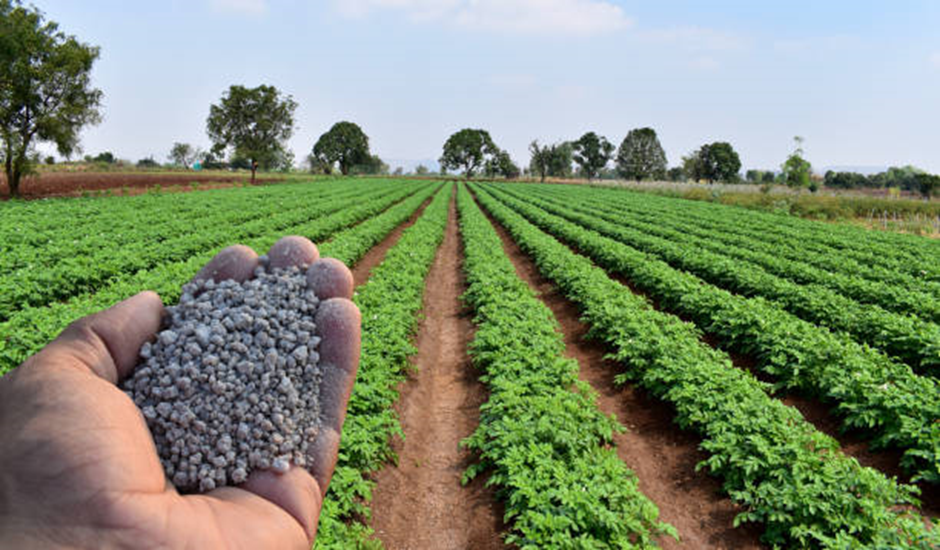
Today I will do some further rumination on ammonia whose main use is for nitrogenous fertiliser. The current global production of ammonia is about 180 million tons per annum and almost all of it is produced by the Haber Bosch process which was first commercialised in Germany in 1913. Traditionally either coal or natural gas are used to produce hydrogen which is then reacted with nitrogen to make ammonia. Natural gas is the dominant and preferred feedstock and steam methane reforming is the most practiced commercial technology employed. Using this technology for every ton of hydrogen produced you produce about 9 tons of CO2. So, if this were the only process used the CO2 emissions from ammonia production would be 285 million tons per annum (tpa). Less efficient technologies like coal gasification are also used and the true figure is more in the region of 450 million tpa. https://cen.acs.org/environment/green-chemistry/Industrial-ammonia-production-emits-CO2/97/i24.
Nitrogen fertiliser is not an optional nice to have. Smil correctly argues that ammonia production in the 20th century was one of the key enablers of human population growth from 2 billion to 7.9 billion. Nitrogen fertiliser is an integral part of modern commercial agriculture that feeds the planet. If nitrogen fertiliser production were banned and stopped abruptly billions would starve. It is true that modern meat-eating diets, particularly beef have also driven nitrogen fertiliser consumption and that if we changed our dietary habits and used fertiliser more efficiently, we could perhaps reduce our nitrogen fertiliser consumption. It is however still essential.
So, what does the future hold for ammonia production? The saviour is of course (drumroll) green hydrogen! Green hydrogen is made directly from water using renewable electricity and there are no CO2 emissions. Now you can produce the hydrogen you need for ammonia production without CO2 emissions. There is currently no commercially proven alternative to making green ammonia than to use green hydrogen. South Africa produces about 600-kilo tons per annum (ktpa) of ammonia, but this is not sufficient and more than 600 ktpa is imported to meet the region’s needs.
Fortunately for us, there are grand plans to build Gigawatt (GW) scale green hydrogen plants in South Africa and Namibia. The European Union is looking to import 10 million tpa of green hydrogen by 2030. https://www.rechargenews.com/energy-transition/bloody-hard-but-possible-eu-plots-renewables-and-green-hydrogen-dash-from-russian-gas/2-1-1181308. Once the green hydrogen is produced on the west coast of southern Africa it is not a simple matter to transport it to Europe. A recent study by the International Renewable Energy Agency (IRENA) has shown that the most efficient way to transport green hydrogen to Europe is to convert it to ammonia first. https://www.irena.org/publications/2022/Apr/Global-hydrogen-trade-Part-II. Ammonia is much easier to ship than hydrogen.
Is the plan to then use the ammonia for fertiliser when it arrives in Europe? Not exactly. The idea is that we will then put up another plant in Europe to break apart the ammonia (crack to use the correct terminology) back into nitrogen and green hydrogen. Because cracking ammonia requires energy, we will need to use some of the green hydrogen to drive the cracking reaction. Then the grand idea is that the European Union (EU) can start replacing natural gas with hydrogen for uses like heating.
Let us now take a step back and look at this. Let’s start with a ton of green hydrogen. From this, we can produce 5.7 tons of green ammonia. Producing 5.7 tons of ammonia using steam reforming of natural gas requires 18.5 tons of natural gas and it produces 51 tons of carbon dioxide emissions. If we start with 5.7 tons of green ammonia and crack it back to hydrogen, we get 0.85 tons of green hydrogen because the process has an energy efficiency of 85%. If we burn this 0.85 tons of green hydrogen, we can replace 2.04 tons of natural gas because the mass-energy density of hydrogen is more than double that of natural gas. Burning 2.4 tons of natural gas emits 5.61 tons of carbon dioxide. So, if we use a ton of green hydrogen to make green fertiliser we avoid 51 tons of carbon dioxide emissions. Alternatively, we can burn it for heat and avoid 5.61 tons of carbon dioxide emissions. The difference is a factor of 9.1. Dear readers, I am getting old and decrepit so please feel free to check and correct my back of the envelope calculations.
What is the point of green hydrogen in the first place? Oh yes, it’s to avoid carbon dioxide emissions. So, it would seem that we should first prioritise the production of green ammonia for fertiliser before using it to replace natural gas as a heating fuel. But that’s not what those clever politician chaps at the EU are proposing.
The idea that we should prioritise the use of green hydrogen for the best applications is not new. I provide one reference here to the Hydrogen Science Coalition where there is a lot more analysis and information. https://h2sciencecoalition.com/manifesto/#blending-green-hydrogen.
In the case of South Africa, we will export the green hydrogen as green ammonia which will be cracked to hydrogen to replace natural gas, and continue to import more than 600 ktpa of ammonia made from natural gas. Go figure.
For those of you who didn’t know I am uniquely privileged to have a direct and exclusive communication portal to the Vorlons who are the most advanced alien race in the Universe. They keep telling me that humanity is far from ready to be able to interact with an advanced alien civilization. This isn’t helping and they have pushed out the planned date for first contact by another century.
Thank you for all the ideas and comments. I really appreciate them and please keep them coming.
Regards
Bruce
 Ruminant Pink Friday
Always extremely entertaining to read your thoughts on a Friday.
Smil misses a point. The scientists that I admire are the ones who did the hole to the right depth. Those who keep digging tend to be egotists who are just in it for themselves. Those who take a broad view irritate because they expect someone else to do all the hard work. How often did you go to a meeting where someone said why don’t we do this, when what they really meant was why don’t you do this and I can get the credit! Those scientists who roll their sleeves up and provide what is needed, are the ones worth knowing.
LikeLike
Good point Mike and you have exposed my laziness!
LikeLike
No one could ever accuse you of laziness. Not only were you inevitably worth listening to, but you always gave a maximum commitment to the team. You also use to listen to me when I needed a good moan! Priceless.
LikeLike
I suggest you try the explanation in picture form. Even politicians read and understand comics.
LikeLike
Do you often hear these voices Bruce?
LikeLike
This may be a stupid question Bruce, but I have no shame in asking them- how does sewage stack up as a nitrogen fertiliser replacement. We spend a lot of energy trying to denitrify sewage…(and to be honest in KZN most of it just goes straight to ocean)… could it be upgraded to a fertiliser replacement instead?
LikeLike
Hi Jenna
It’s good to hear from you and apologies for my slow response. I’m not that clued up on the topic of human waste as a potential replacement or supplement for industrial fertiliser. I do see it is a research topic. One of the foremost global gurus on nitrogen fertilizer use worldwide is Vaclav Smil and I reference just one article here. https://www.vaclavsmil.com/wp-content/uploads/docs/smil-article-worldagriculture.pdf. Currently >99% of nitrogen fertiliser is produced by the Haber Bosch process. Not sure whether human waste can provide the scale required to what it would cost. The other (expensive) option is to use green hydrogen
LikeLike