
Aweh, My Dearly Beloved Fellow Ruminants & Groupies
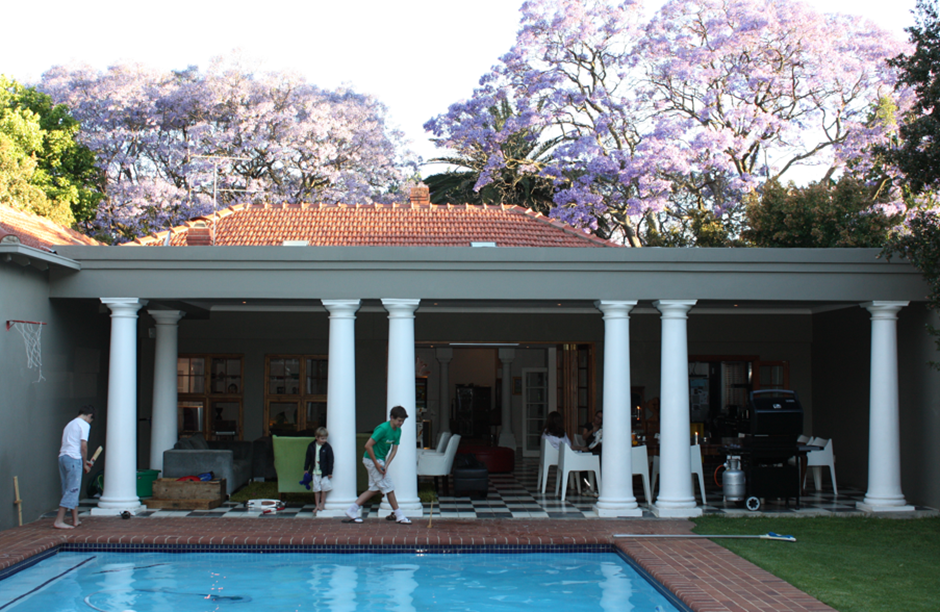
Today I have decided to do some navel-gazing about a family living in Saxonwold, Johannesburg. This is, of course, my navel and my family. What else would a self-diagnosed narcissist do?
Let’s start with understanding Saxonwold. Our family moved into a house here in May 2010. We’re still here.
Saxonwold is one of Joburg’s older, leafier suburbs, all quiet wealth and old money charm, tucked between Zoo Lake and the city’s showier northern cousins. Once, it was just trees planted by the Randlords; now, it’s where the gates are high and the secrets higher. In the pecking order of Johannesburg suburbs, Saxonwold doesn’t shout new money or flaunt power; it suggests you’ve nearly arrived.
At the very top of Joburg’s social crest sit Westcliff, Sandhurst, and Hyde Park, suburbs where old money and serious power meet, with Waterfall rising fast as the glossy kingdom of new money. Saxonwold lingers just below, refined and respectable, watching the summit from a shaded, slightly quieter perch.
For a time, Saxonwold was the quiet stage for something far darker. The Guptas, that infamous family at the heart of South Africa’s state capture saga, lived behind one of its high walls, plundering billions while pulling the strings of the Zuma presidency. When the era unravelled, they did what all good villains do: scarpered abroad, leaving a trail of scandal and a suburb forever etched into the story of a nation betrayed.
And then came the whispers of a shebeen in Saxonwold. Not just any shebeen, but the kind of secret, unlicensed bar known in South Africa for jazz, politics, and late-night plundering. The sort of place you’d only find if you already belonged. Brian Molefe, under pressure and squirming, claimed he wasn’t visiting the Guptas; he was just on his way there. Whether it ever existed or not hardly matters.
These days, Saxonwold has settled back into its comfortably boring rhythm, all tidy hedges, quiet streets, and no trace of the scandal that once made it interesting. The stories have faded, the mystery’s gone cold, and the gates are back to doing what they do best: keeping things in and curiosity out.
Drop Saxonwold into the world of wealthy American suburbs, and it wouldn’t stand a chance. The American elite used to sprawling estates in Greenwich or Silicon Valley compounds with panic rooms and Peloton studios would take one look at Saxonwold’s charming but ageing homes and whisper, “quaint,” before Googling the property prices and recoiling in disbelief. For the price of a Joburg mansion, they could barely get a Manhattan parking spot. To them, Saxonwold would feel more like a budget Airbnb than a status symbol. All the old trees in the world wouldn’t save it from being firmly filed under “not quite.”
And now, for something completely different: the residents of Saxonwold who actually live here.
Ours is a household of four working graduates: Nerine and I, the gracefully fading has-beens, and our two sons in their twenties, still circling the nest. Oliver, a candidate attorney perfecting the art of polite objection, and Connor, the computer science grad, quietly helping manage billions at a financial services firm.
We’re in that odd in-between phase, not quite empty nesters, not quite roommates, just four professionals sharing a roof, a kettle, and a peaceful truce over the TV remote.
Then there are the temporary residents, part-time, full-heart fixtures in Saxonwold. Phoebe and Megan, the boys’ girlfriends, float in and out with ease. George, my nephew and resident human rights lawyer, has a conscience that far outweighs any interest in capitalism. Geoff, my brother and asset manager, makes occasional appearances, always with valuable market insights and zero tolerance for subpar coffee.
And of course, the animals who truly run the house: Bailey the ever-hungry Labrador, Buzz the manic miniature Schnauzer puppy with small dog attitude, Jazz the Burmese cat who tolerates us all, and the goldfish, Fish 1, Fish 2, and Fish 3, living quiet, unbothered lives in their tank, blissfully unaware of Saxonwold, state capture, or shebeens.
Then there are the legendary Sunday lunches
Chaotic, generous affairs where everyone’s welcome, including the grandmothers. There’s always too much food, people talking over each other, and debates ricocheting from Trump to religion, AI to Amapiano, climate change to early Byzantine church music. Bailey patrols loyally under the table, ever-hopeful for a dropped morsel. And at the centre of it all is Nerine quietly, consistently making it happen, the steady hand behind the roast chicken, roast beef and Yorkshire pudding, and the real glue that holds this noisy, opinionated tribe together.
And all of this, the Sunday lunches, the steady jobs, the comfortable life in Saxonwold, exists within the deep contradictions of South Africa.
Yes, there’s privilege, and yes, there’s luck. But our jobs aren’t just the result of hard work, they’re built on access: to private schooling, to university, to safe streets and stable homes. We’ve had every opportunity to build the skills that got us here. That’s not the reality for most South Africans. While millions face failing schools, unemployment, and the fallout of political corruption, we’ve had the means to work around the dysfunction to install solar, buy water tanks, and pay for private healthcare.
And that’s the frustration: a country with such extraordinary potential, held back by leaders who plunder while the poor are told to wait. Saxonwold, with its quiet charm and loaded history, holds all these contradictions, comfort and guilt, privilege and politics within its leafy borders.
So here we are. Living in a suburb that once sheltered scandal, now wrapped in quiet comfort, trying to raise good humans in a country that often feels like it’s being held hostage by its greed and corruption. We live in a system we know is broken. But here’s the hope, that around our Sunday table, in the messy, noisy debates and the shared food and the stubborn belief in doing better, something shifts. Maybe the next generation won’t just work around the system; maybe they’ll help rebuild it. Or at the very least, keep asking the right questions, which start with a Sunday lunch.
Until next time
Bruce
 Ruminant Pink Friday
Sounds dreadful. I could do with dreadful from a damp northern suburb of London (ish) doing our level best it seems to introduce bad government and kill democracy in the the mother of all parliaments.
LikeLike