
Aweh dearly beloved fellow ruminants & groupies
Last week I turned 62 and my presents consisted of warm clothes for winter and books. Very good gifts for me. I would like to classify these as necessities and not luxuries. Nerine bought me a book titled, “Unequal” about inequality. It is not a book I would have chosen myself but, of course, I’m reading it and it has been the subject of spirited debates around the family dinner table.
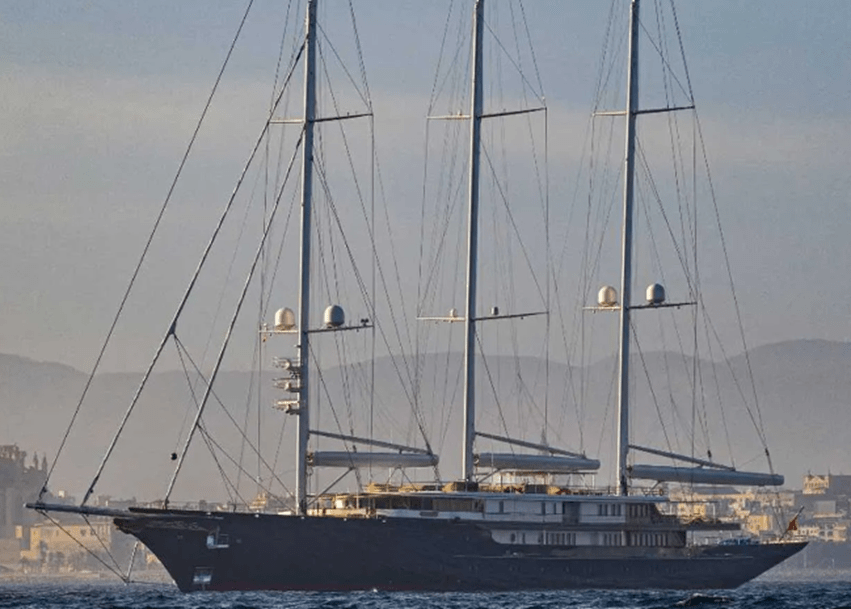
The opening story is about Jeff Bezos, the third wealthiest man in the world, and how he started his business in his garage on a makeshift trestle table and instilled a culture of frugality into the Amazon business which persists to this day. Is Jeff Bezos himself still frugal? Not so much it turns out. The featured image is of his hyper yacht, estimated to cost $500 million which was completed in 2022. Bezos has divorced his wife of 25 years and his new girlfriend, Lauren Sanchez, is a helicopter pilot. One look at his yacht and you can see that you cannot land a helicopter on it. A very serious design flaw. Not to worry he commissioned a somewhat smaller companion yacht with a helipad. Problem solved.
The point of this opening story is, I guess, to invoke a sense of moral outrage regarding inequality and excess. From my humble perspective his yachts are excessive and unnecessary but who am I to judge? But most of humanity likes luxury a lot. The world’s wealthiest man Bernaud Arnaut has made his fortune selling luxury goods. Purveying luxury goods and services is a very big business. This is simply a reflection of what we want. Luxury is aspirational and admired.
Obviously, I cannot begin to compete in the luxury space with the likes of Jeff Bezos, but I could hardly be described as indigent and we have some of the lower-level luxury trappings of what are termed high net-worth individuals, such as BMW’s.
What does this say about us? At any given time, there are several famines in the world with people dying of hunger. Today as many as 828 million people are unsure where their next meal is going to come from. In South Africa, 2.1 million people have insufficient food. Is rescuing people from imminent death a noble and moral thing to do? If you walked past a child drowning in a pond in the park, would you wade in getting your clothes muddy and wet to save the child? What about starving people?
During the Covid pandemic and lockdown, our doorbell started ringing with people asking for any form of food no matter how small or basic. So, we started providing some basic food but soon our doorbell was ringing incessantly, and ever larger groups congregated outside our house and then they started fighting amongst themselves and we realised we had no choice but to stop. Perhaps we were naïve and stupid, and we should rather have donated money to charities that specialise in this? If you do this how much should you donate?
So, let’s consider the extreme position of the philosopher Peter Singer (PS). He published a paper in 1972 entitled, “Famine, Affluence and Morality”. He suggests that you have a moral obligation to sacrifice the luxury trappings of life to save the starving and that you cannot abdicate that responsibility to governments that are demonstrably failing to do this. He suggests you need to give till it hurts by sacrificing luxuries. Apparently, he lives a very frugal life with no luxuries so he can give money to charity.
Am I going to sell my BMW and give the money to charity? Well, it’s only a 3 series, and it’s five years old and there are much more expensive models and ok I’m just blabbering. No, I am not going to sell it. So, is Peter Singer, right? I can’t fault his logic. What can I fault? I can fault his understanding of human nature. He is an outlier. The success of the entire capitalist edifice is founded on aspiring to individual success, affluence consumption, and luxury. The Chinese version of communism is no different. The luxury industry is thriving in China. Successful political systems need to reflect human nature to be successful. If they don’t, they fail and are outcompeted by systems that do reflect human nature. Is this right? Perhaps not but it is so.
Can human nature change? I don’t know but I speculate that our nature has been fostered by tens of thousands of years of evolution and that our nature has enabled us to become the apex predators that dominate the planet. This nature will not change easily. Dearly beloved I suggest, ever so tentatively, that the kinder gentler human nature suggested by PS would not have brought us to our dominant position. What motivates us? Is it not the prospect of success, affluence, luxury, and a better position in the dominance hierarchy? This is the driving force behind the industrial revolution, economic growth, and the current world order. I would speculate that the desired human nature of PS could lead to our demise. That does not mean that our current nature will not lead to our demise in a different way.
What does all of this say about how noble our nature is? Perhaps we are not as noble as we would like to think we are.
Thus, I justify my BMW. Or not?
Thank you for all the ideas and comments. I really appreciate them and please keep them coming.
Regards
Bruce
 Ruminant Pink Friday