
Aweh dearly beloved fellow ruminants & groupies in day 736 of re-modified lockdown Level 1.
Period as a semi-retired pensioner: 364 days
I have nearly reached a year of being a grumpy semi-retired pensioner and as of today, I am gainfully employed again. This has the potential to make me even more grumpy. As I must I return to the topic of energy and the renewable energy transition also called the just energy transition (JET).
There is a flurry of activity and innovation relating to renewable energy technologies. South Africa has an installed electricity capacity of 58 GW although the annual average consumption is only 22 GW. https://www.usaid.gov/powerafrica/south-africa#:~:text=According%20to%20the%20Ministry%20of,(MW)%20from%20all%20sources. The global installed electricity capacity is 7200 GW which is expected to more than double by 2050. https://www.statista.com/statistics/859178/projected-world-electricity-generation-capacity-by-energy-source/.
There will need to be hundreds of multi-GW energy projects all over the world with the costs running into the tens of trillions of US dollars to complete the renewable energy transition. The replacement of the fossil fuel energy infrastructure with renewable energy technology is the biggest commercial undertaking in the history of humanity.
Are those who pioneer and own new renewable energy technology projects at the multi-GW scale going to make money? This brings me to the concept of the valley of death for commercialisation of new technology. https://www.researchgate.net/publication/318777435_The_Valley_of_Death_for_New_Energy_Technologies.
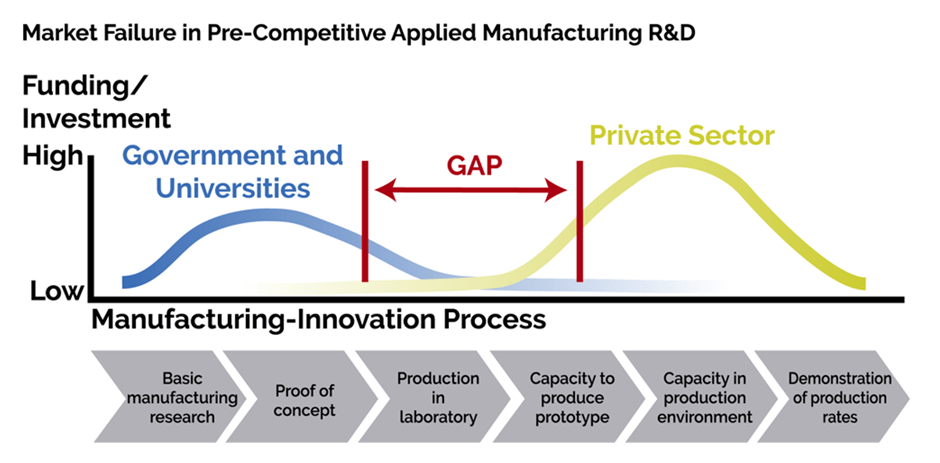
The featured image explains the concept of the valley of death for technology development. During the research and development and innovation phase government, universities, and start-ups funded by venture capital drive innovation and technology development. Adequate resources for new technology development are often available during the basic research phase, available resources often drop precipitously once the basic research has been completed. If an idea can make it through the valley of death to prove commercial viability, however, once again ample resources will be available to take the idea to market.
One of the earliest authors to apply the valley of death notion to energy technologies, Norberg Bohm (2000), noted that the phrase is meant to reflect the common experience that many new technologies “die” before being successfully commercialized. She argued that “For technologies such as (multi-GW) power or energy plants, which may be standardised but not mass-produced, the initial plant is much more expensive than the 5th or 10th plant” and that early versions may not survive “an extended period of negative net cumulative cash flow.” https://user.iiasa.ac.at/~gruebler/Lectures/skku_2009/readings/norberg-bohm_tech_incentives_2000.pdf. The risks for the owners of a $10 billion pioneering energy project are not for the faint-hearted.
There are several feasibility studies in progress for multi-GW renewable energy projects using pioneering technology and green hydrogen and associated fuel cell electric vehicles are just two examples. The first few multi pioneering multi-GW green hydrogen plants (if they are ever built) are likely to be enormously expensive and subject to the iron law of megaprojects formulated by Bent Flyvberg of the Oxford business school which was covered in a previous blog. https://ruminantpinkfriday.com/2021/02/24/the-iron-law-of-megaproject-management/. The iron law states, Over budget, over time, under benefits, over and over again.” If pioneering technology is involved the probability of an unsuccessful megaproject is greatly increased.
For engineers and scientists, pioneering megaprojects are tremendously interesting and exciting. This is what they have been trained to do and they are motivated by the technological sublime:
“Technological sublime: The rapture engineers and technologists get from building large and innovative projects with their rich opportunities for pushing the boundaries for what technology can do, like building the tallest building, the longest bridge, the fastest aircraft, the largest wind turbine, or the first of anything.”
There is the small matter that the final investment decision (FID) report used to justify the project will require a few fibs regarding cost, schedule, and operational risks otherwise no sane board of directors would approve the project. There can be no acceptable excuse for good engineers with proper experience in megaproject execution with pioneering technology. It’s better not to have engineers on the team who have that T-shirt. Rather have younger ideologically pure engineers writing the reports because then there can be plausible deniability and all that. In your incentive scheme, it is also useful to have large bonuses for achieving FID. Then perhaps your more experienced engineers might look the other way or figure that they will be retired when the shit hits the fan several years later.
Ideally, engineers would like to see projects actually being built but in the current flurry of activity, there are still plenty of opportunities to work on the development of technology which will die a rightful death sometimes slowly and painfully in the valley of death.
If you see these pioneering megaprojects as part of a holy quest to save the planet does commercial viability really matter? If the pioneering business can’t pay its debts and reward the shareholders and goes bankrupt perhaps the project will still rise from the ashes after the shareholders have been wiped out and the debts are written off. The lessons learned can then be ploughed into future projects and pave the way for the just energy transition and later commercial success. Is this perhaps how things will play out?
If it is your pension money that has been invested in these projects then, just perhaps, you might not be so sanguine about your investment being wiped out. Knowing that you have done your little bit to save the planet might not be enough.
There are still many unanswered big questions in the renewable energy transition and there are many competing and mutually exclusive technology options and there are going to be winners and losers. The battle between green hydrogen and the direct use of electricity is one such example. I have nailed my colours to the mast on this one. https://ruminantpinkfriday.com/2021/12/24/christmas-eve-ruminations-regarding-a-christmas-grinch-innovation-green-hydrogen-and-the-next-financial-crisis/ Could I be wrong? You be the judge. I have been known to be wrong in the past. Nerine, my wife. likes to point that out.
It’s probably not the pioneers of multi-GW new technology energy plants who are going to make money. The contractors, consultants, and technology providers are much better placed. Be careful of their advice. They are not your friends.
What about the idea that South Africa should pioneer these multi-GW energy projects? Well, whose money will be used to pay for this? The South African taxpayer? The shareholders and banks? Foreign governments? The last option is the best.
So, what is my considered investment advice regarding investing in multi-GW pioneering energy projects? Spectate from a distance. If you have integrity don’t fib for a bonus.
Thank you very much for your comments and suggestions and please keep them coming.
Regards
Bruce
 Ruminant Pink Friday